


Five Netflix book adaptations you can binge in a weekend
Book adaptations always come with a little extra weight, and yeah, that shows up right away when you press play. You already know this story had a life before the screen, and it had been written out and carried by readers long before Netflix decided to turn it into a movie.
And you have to agree that so far, whatever adaptations Netflix has picked, the platform has done justice to them. The idea behind that is picking up stories that already have a strong base and turning them into films or shows that are easy to get through over a weekend, which works when you just want something you know is good without committing to anything too long.
But not every adaptation handles the source material in the same way. While one adaptation might stick close to what was written, another changes things to fit the screen better. The most fun part is noticing those differences while watching it on Netflix because then, you also have the liberty to pause and compare.
And that’s the idea behind this list. Five Netflix movies based on books that already had strong stories behind them and are now turned into something you can finish over a weekend and actually enjoy without feeling stuck halfway through.
Five Netflix book adaptations you can binge in a weekend
The Wonder (‘The Wonder’ by Emma Donoghue)
The Wonder is a wonderful book, but it starts off with a strange premise: a young girl in a rural Irish village claims she hasn’t eaten for months, yet she is still alive. We then see a nurse being brought in to observe her, and you are basically watching everything through her eyes, trying to figure out what’s going on.
What makes this more interesting is that the story is inspired by real historical cases of “fasting girls” from the 1800s. People genuinely believed this could happen, which makes you more uncomfortable than you think while you are watching it. Also, the book’s author, Emma Donoghue, wrote the screenplay herself, so you don’t have to worry about the film distancing itself from the original idea. And sure, it might not be a film you put on for easy entertainment, but if you are looking forward to watching something thought-provoking, this one is a must-watch.
The Last Letter from Your Lover (‘The Last Letter from Your Lover’ by Jojo Moyes)
The Last Letter from Your Lover gives you two love stories at the same time. Though they are set decades apart, you witness switching between them as the film progresses. In the 1960s timeline, a woman wakes up after an accident with no memory, only to discover letters that hint at a secret affair. Then, in the present day, a journalist finds those letters, and before you know it, she sets sail on trying to piece together what really happened.
If you have read Jojo Moyes before, you already know that her strength is her emotional storytelling, and this book was a bestseller long before Netflix picked it up. Netflix did a great job making sure the tone of the film is kept just like the book. To do so, director Augustine Frizzell has focused more on longing and missed chances than big dramatic moments. If you love romance dramas, you will love watching two timelines slowly getting connected, which makes it perfect for a slow weekend watch.
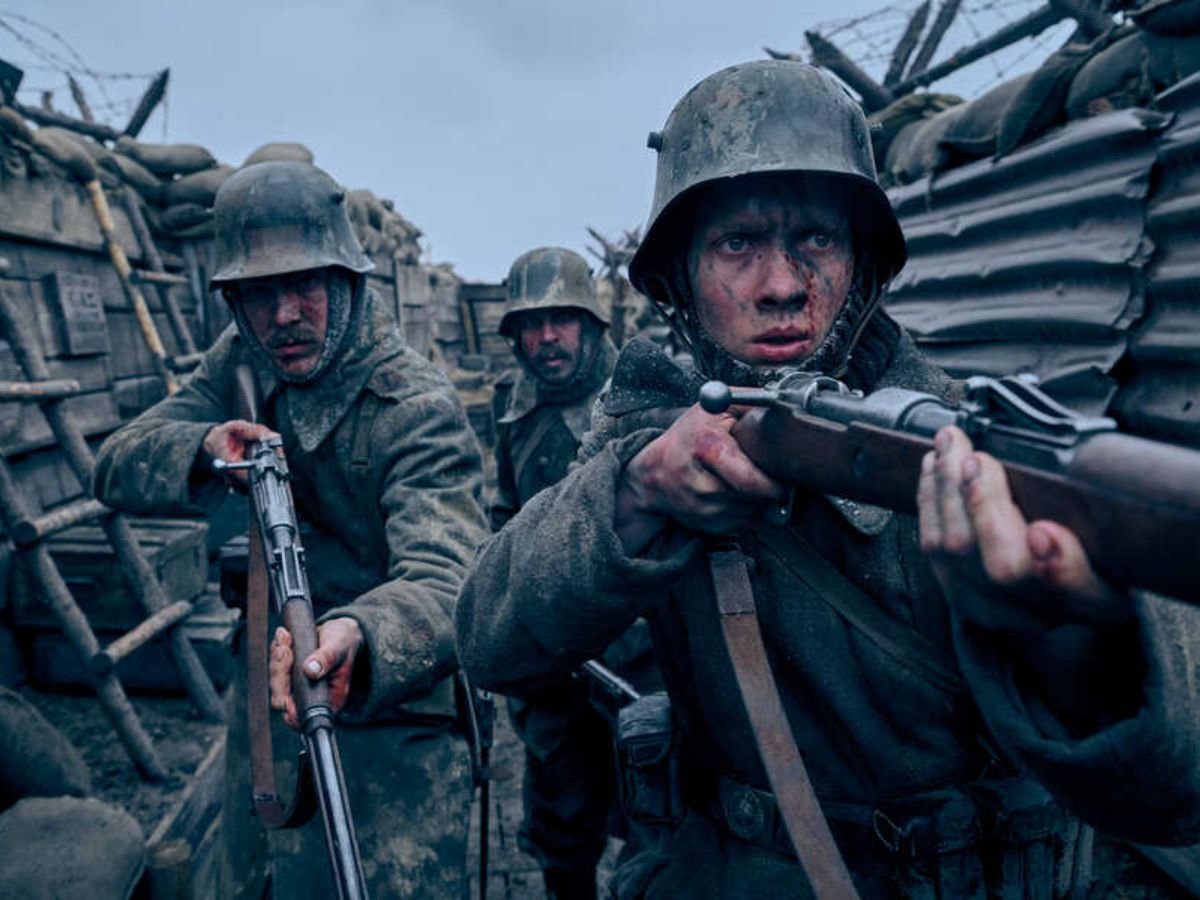
All Quiet on the Western Front (‘All Quiet on the Western Front’ by Erich Maria Remarque)
Erich Maria Remarque’s novel with the same name is one of the most well-known anti-war books ever written, first published in 1929 and based on his own experiences as a German soldier in World War I. A remarkable point about the book is that it doesn’t glorify war at all. Instead, it focuses on how fast young soldiers lose their innocence once they are thrown into it.
And though multiple adaptations of All Quiet on the Western Front have been made over the years, Netflix also decided to attempt one in 2022. Netflix’s adaptation is closer to the core idea of the book than you think, but it also adds its own perspective, especially by showing more of the political side behind the war. And it is more direct than you think. It doesn’t try to soften or tone down anything, and that’s exactly what the book was known for, too. Fun fact: the novel was banned in Nazi Germany for its anti-war stance. If you haven’t watched it yet, now’s better than ever.
Rebecca (‘Rebecca’ by Daphne du Maurier)
Daphne du Maurier’s Rebecca has been around since 1938, and it’s one of those novels people still talk about because of how tense and mysterious it is. Coming to what happens in the story, it follows a young woman who marries a wealthy widower and moves into his grand estate, only to realise that his late wife, Rebecca, still seems to have a strong presence in the house.
Just like the book, you are now watching this new bride trying to adjust, but everything around her, from the house staff to her husband’s behaviour, keeps reminding her of someone she can never live up to. What’s interesting is that this isn’t the first adaptation. Alfred Hitchcock made a famous version back in 1940 that even won Best Picture. So this Netflix version had a lot to live up to. If you want to see how it turned out, you’ll have to watch it yourself.
The Good Nurse (‘The Good Nurse’ by Charles Graeber)
Before it became a film, The Good Nurse was a true-crime book by Charles Graeber, and that already tells you this isn’t a made-up story. It is based on the real case of Charles Cullen, a nurse who was responsible for multiple patient deaths over several years, across different hospitals.
The film doesn’t focus much on him being a typical villain, but more on how he managed to get away with it for so long. You also follow a fellow nurse who starts noticing small things that do not make sense, and that’s where the tension comes from. Imagine something like this happening in a place that’s supposed to be safe. That alone is enough to give me chills. One thing worth knowing is that hospitals actually hesitated to act against Cullen because of legal and reputational risks, which the film highlights. Knowing that all of it was real does make it a difficult watch, but trust us, it is worth the discomfort.