


Five crucial details missing from ‘Shipwrecked: Nightmare at Sea’
The Netflix catalogue bearing the tag of “true story” has always been ironically and terrifyingly stranger than fiction, and Shipwrecked: Nightmare at Sea adds to that, doubling down on the shock value with one of the most harrowing tales of maritime crisis.
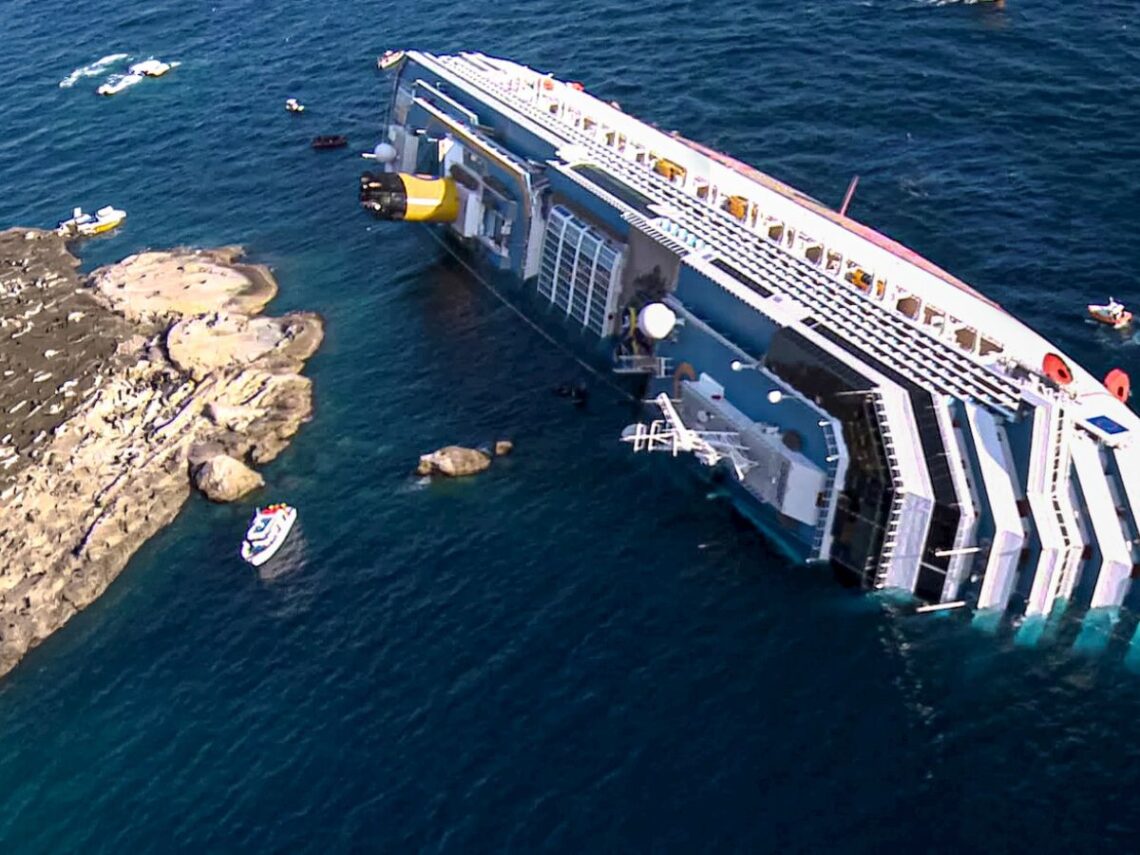
The documentary details the tragic 2012 sinking of Costa Concordia, a luxury cruise liner that set sail on the Mediterranean Sea on January 13th, carrying over 4000 passengers and crew members. The massive ship reportedly deviated from its original route to perform a sail-by salute near Giglio Island, causing the vessel to hit a reef called Scole Rocks and eventually sink.
Directed by Chiara Messineo, Shipwrecked: Nightmare at Sea reconstructs the infamous incident using surveillance footage, passenger videos, and black box recordings, also featuring interviews with survivors, crew members, and expert analysts to try to figure out how the tragedy exactly unfolded and find answers to why it took so long for a full evacuation to begin despite repeated calls from the Italian Coast Guard.
While Shipwrecked includes most of the information regarding the case, including how Captain Francesco Schettino was eventually held responsible for the tragedy, it still leaves out quite a few details you might want to take a look at.
Five chilling details Shipwrecked: Nightmare at Sea leaves out
Francesco Schettino broke multiple international maritime laws
Shipwrecked: Nightmare at Sea features multiple phone call recordings between Francesco Schettino and the Italian Coast Guard, where the latter persistently asks the captain to come clear about the urgency of the situation. According to La Stampa, Schettino reportedly failed to acknowledge the nature of the emergency, despite the head of the engine room informing him of the extent of the damage right after the collision.
Schettino kept telling the Coast Guard that they were simply tackling a blackout, even after the chief engineer detailed that the vessel had an “irreparable” 115-foot gash. Prosecutors later went on to argue that the captain should have ordered evacuation right then and there itself as international maritime safety regulations require passenger ships to be evacuated within 30 minutes of an order, citing that it took six hours to fully evacuate Costa Concordia.
The captain’s claims about the lifeboat
From the series of calls between the captain and the Italian Coast Guard in the Netflix documentary, it is conclusive that Francesco Schettino eventually abandons the ship while passengers are on board. In fact, the Coast Guard can be heard ordering him repeatedly to get back.
According to transcripts obtained by Reuters, Schettino later alleged that he accidentally fell into a lifeboat when he was helping passengers and wasn’t able to return. “Everyone had life vests on, but for me. Well, my life at that moment had been destroyed, I wasn’t interested in life vests… it was over for me,” Schettino said.
The Costa Concordia ship lacked a mandatory lifeboat drill for passengers
Ships were supposed to host mandatory muster drills for all the passengers before the events of the Concordia disaster within 24 hours of leaving the ports for their designated sail. These drills instructed passengers on how to board lifeboats and evacuate the vessel in case of emergencies. However, as per CNN, no such drill took place for the 600 passengers who boarded the ship shortly before departure.
After an extensive internal cruise industry review in 2012, international cruise organisations launched a new policy requiring ships to hold mandatory drills before leaving port.
The last Concordia victim was found two years later
Authorities reported about four additional remains in the shipwreck two years after the maritime tragedy. In November 2014, NBC News confirmed that the remains had been identified as Russel Rebello, a waiter working on the ship and the final person who went unaccounted after the rescue effort.
Costa Cruises offered compensation to passengers
Neither Costa Cruises nor its parent company, Carnival Corporation, was put on criminal trial over the incident, which is mentioned in Shipwrecked. However, consumer groups representing the passengers negotiated with them to offer compensation estimated at $14,460 for each person over lost luggage and trauma. Costa Cruises also promised to refund the costs of the cruise, travel, and medical expenses.
Those who chose not to receive the compensation were free to pursue legal action against Costa Cruises and its parent company. In 2021, one of the Italian courts ordered the company to compensate passenger Ernesto Carusotti with $105,000 following a civil lawsuit. Meanwhile, the company paid another million euros fine to settle potential criminal charges triggered by the disaster.