


‘Unabomber’ ending explained: What turned Ted Kaczynski into the Unabomber?
Janus Metz Pederson’s Unabomber on Netflix chronicles the story of one of the most notorious domestic terrorists the United States has ever witnessed, Ted Kaczynski, who terrorised the nation with untraceable mail bombs for nearly two decades.
Between 1978 and 1995, Kaczynski, AKA Unabomber, took three lives, injuring 23 others with his mail bombs. But Netflix doesn’t just focus on his crimes and the prolonged manhunt that followed. It alternates between two primary timelines: Ted’s Harvard years and the FBI-led pursuit decades later.
The film opens with Thomas J Mosser opening his mail to find a mysterious package, resulting in an immediate explosion that kills him. This is supposedly the second life Unabomber claimed with his homemade explosives, with which he operated for over 17 years. Not long after, the tabloids highlighted the Unabomber’s manifesto, which seemed like an open declaration of war against the industrial age.
While the FBI investigation led by agent Joanne Miller takes centre stage, Unabomber turns its focus to the early years of Kaczynski to explain how his Harvard years may have contributed to his dangerous evolution. But how exactly did that turn Ted into the Unabomber?
What turned Ted Kaczynski into the Unabomber?
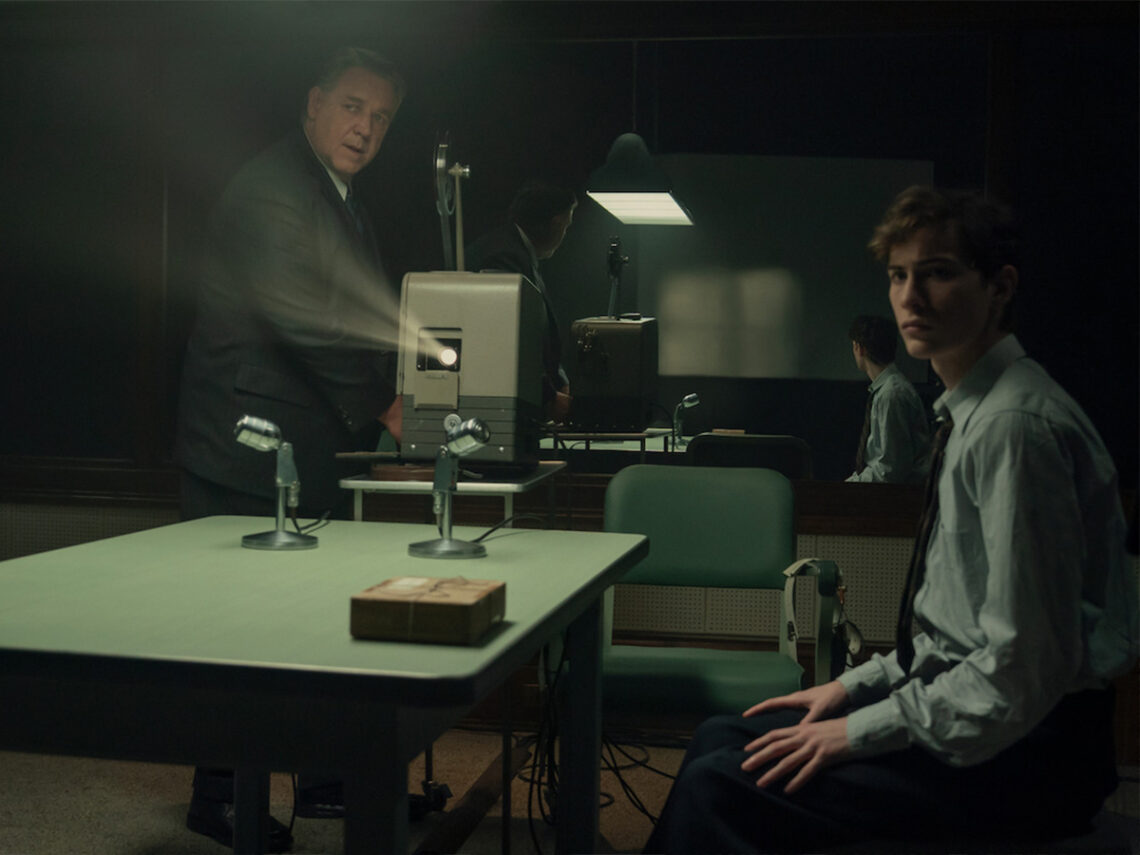
Unabomber dramatises Ted Kaczynski’s youth at Harvard University, where he finds himself increasingly drawn to Professor Henry Murray’s class. Murray, famous for co-creating the Thematic Apperception Test, announces a debating experiment, where Ted eagerly participates. However, his first time debating philosophy with Mr C doesn’t go as planned. Before long, Ted catches up to the art of argumentation, embracing an aggressive nature in the process.
Simultaneously, his maths grades start to falter, yet Ted seems relentlessly drawn to philosophy. With each passing day, Kaczynski grows increasingly obsessed with debates. However, upon learning that Henry and his team have been documenting their private conversations to gain an upper hand in the debates, everything spirals out of control. To make things worse, Henry had been conducting experiments on how to tame people like Ted instead of helping them grow.
The betrayal sows the seeds of revenge in Ted, and he leaves Murray’s experiment to become who the world calls the Unabomber. Although he has long surpassed Mr C in debates, Ted’s ultimate opponent is Henry himself, who only wants to make Ted submit. The whole experiment had only one motive: to subdue anti-authoritarian thoughts, and Henry’s report card on Ted’s transformation is strong proof.
While Murray may believe that Ted’s thought process and feelings are symptoms of schizophrenia, his aim to restrict and suppress the latter doesn’t work out well. Henry’s arguments about Ted’s inability to convince society through dialogue backfire in more ways than one, in turn persuading Kaczynski that conversations have no value when it comes to systemic problems.
So, what follows is the birth of Unabomber, an entity that rejects the modern idea of civilised discourse and resorts to violent actions and irreversible ultimatums.