


The literary Easter eggs you probably missed in ‘Vladimir’ on Netflix
It has been only a day since Vladimir was released on Netflix. Yet, the Internet is already caught up on pages-long Reddit threads discussing and debating the adaptation they had long been holding their breath for.
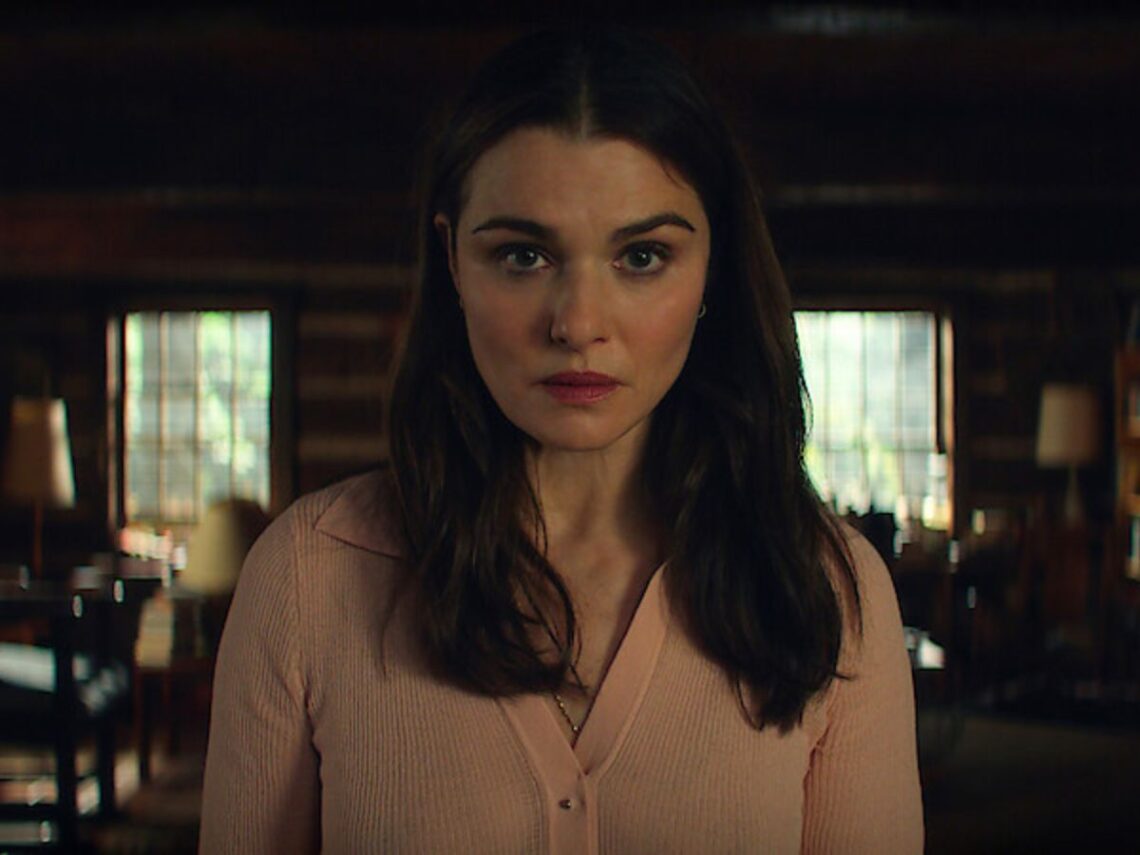
In the series adaptation of Julia May Jonas’s best-selling novel, Rachel Weisz takes the centre stage as an unmoored English professor at a small liberal arts college who develops an unprecedented fascination towards her charming younger colleague, the eponymous Vladimir.
The series heavily borrows from Jonas’s novel, but the Netflix version of Vladimir is sprinkled with literary references from above and beyond. In a conversation with Tudum, creator, writer, and executive producer Jonas said, “I’ve always really liked when any work of art references other works of art, as a person who will then go and seek that thing out.”
From the episode titles to the town bakery, every little corner in Vladimir has an allusion to literature. So, if you’re curious about what they are, here are all the literary Easter eggs you missed in the Netflix series.
Every literary Easter egg in Vladimir
The title of the Netflix series
The title Vladimir is a conscious choice Julia May Jonas made, nodding to Lolita. According to Jonas, the name is a “nod to novels that name themselves after the young woman whom the man is obsessed with, whether it’s Clarissa, or Lolita, or Pamela.” “I wanted to flip the script and have it come from a woman’s perspective.”
Meanwhile, the town bakery is named after Lolita’s Charlotte Haze. As for the setting of Vladimir, the town of Ramsdale, it serves as a nod to the town Humbert Humbert comes to [in Lolita].”
The episode titles and their meanings
As Julia May Jonas puts it, “They’re all titles of women in American fiction.” They’re what she thought “were entries that the protagonist might’ve put on her syllabus.” But who were the authors and what were the stories or novels Jonas selected to tell her story on the screen? Let’s find out!
Episode one: “We Have Always Lived in the Castle”
The first episode of Netflix’s steamy adaptation, Vladimir, is named after Shirley Jackson’s 1962 psychological horror novel about the relationship two sisters share with their sick uncle. “It’s about a family spectacularly brought down, in a very different way, but still it felt appropriate to the first episode,” she explains.
Episode two: “The Awakening”
The second episode title refers to Louisiana author Kate Chopin’s novel, published in 1899, which highlights how breaking away from the Victorian norms of marriage and womanhood helped transform Southern US feminist literature at the turn of the century. Jonas chimes in, saying, “The Awakening is Kate Chopin’s classic about a woman realising her sexuality and awareness of her position in society and choosing to reject that.”
Episode three: “Enormous Changes at the Last Minute”
The third episode title is inspired by Grace Paley’s 1974 short story collection about the intricate lives of middle-aged women, which included pieces published in periodicals and The Atlantic. Famous for her political activism before she died in 2007, the author and poet also taught English courses at Sarah Lawrence College.
In the episode, a lot unfolds as the protagonist invites Vladimir’s wife, Cynthia, over for a pool day, only to be caught off guard by Vlad himself. Cynthia ditching plans at the eleventh hour, despite the overt attempts on the former’s part to curry favour with her, draws parallels with the idea that this enormous change at the last minute is actually “crushing.”
Episode four: “Bad Behaviour”
This particular episode title is inspired by Mary Gaitskill’s 1988 collection of short stories, which offers perfectly timed, subtle, biting takes on taboo topics and the intricate lives of women, making it an apt moniker for what awaits viewers.
Episode five: “Play It as It Lays”
Named after one of the landmark works of American literature in the 20th century, Joan Didion’s novel severely criticises how Hollywood addresses women and their agency in society. Similar to the novel, Vladimir opens with a dramatic irony: the show’s opening salvo is actually made up of events that happen later in the final episodes, which are cut short to backtrack six weeks earlier to start the story properly.
“Why? Unless you are prepared to take the long view, there is no satisfactory ‘answer’ to such questions,” Didion has it written on the introductory page.
Episode six: “Because It Is Bitter, and Because It Is My Heart”
“Because It Is Bitter, and Because It Is My Heart” is borrowed from a line in Stephen Crane’s 1895 poem, “In the Desert.” However, the plot of the episode nods to Joyce Carol Oates’s 1990 novel, centring on a pair of teenagers who form a bond through an act of violence but whose experiences after are severely different due to their race and class.
Episode seven: “Everything that Rises Must Converge”
In this Vladimir episode, the protagonist finally goes on the much-awaited lunch with Vladimir, where their dynamics “converge and ignite.” The title is named after Flannery O’Connor’s 1965 short story collection, which was published posthumously after she died aged 39 from lupus complications.
Episode eight: “Against Interpretation”
Serving as the only non-fiction literary inspiration among Vladimir’s episode titles, “Against Interpretation” is taken from the 1966 Susan Sontag collection of essays. Jonas explains that the title essay’s message about art suggests not to think much about what it means, “just how does it make you feel?”, which is the final reference she purposely chose. “I thought that was the way to end the series.”
The books taught in Vladimir
Vladimir is honestly packed with literary homages at every turn, and the first book we see the professor teach at the liberal arts university is Daphne du Maurier’s 1938 Rebecca. And when the unexpected cameo from the charming Vladimir happens in episode five, she is seen teaching Edith Wharton’s The House of Mirth. While the protagonist also quotes Charles Dickens and George Bernard Shaw, to know if there’s more, Vladimir is currently streaming on Netflix.