


The five best movies to watch on Netflix this weekend
Can we just admit that movies from the 1990s came out during a very strange moment for Hollywood? And by that, we mean studios had money to spend and directors were being allowed to take far bigger creative risks than they probably would now. Also, they trusted their audience; nothing was spoon-fed like today. That’s why the decade produced so many films that still feel impossible to recreate today.
Unlike today, Hollywood in the ’90s wasn’t obsessed with franchises yet. A movie didn’t need to set up six sequels before the climax. It just needed people leaving the cinema talking about it afterwards. And because of that, so many of the ’90s films ended up with far stronger identities of themselves. That’s right, films used to have identities. You remember them properly. Certain scenes people still quote decades later.
Another thing modern streaming films miss? Physicality. Most ‘90s productions still relied heavily on real sets and location shoots, which is the stuff that gave movies an actual texture. Even futuristic films looked tangible back then. Today, every industry is talking about bringing AI to use and it feels like we’re losing that rawness these retro films gave us.
Which is probably why these films still make such amazing weekend watches. Films without the Netflix lighting, and luckily, Netflix still has a few proper gems from that decade sitting in its library right now, and honestly, a lot of them hold up far better than people expect.
The five best movies to watch on Netflix this weekend
The Fifth Element (Luc Besson, 1997)
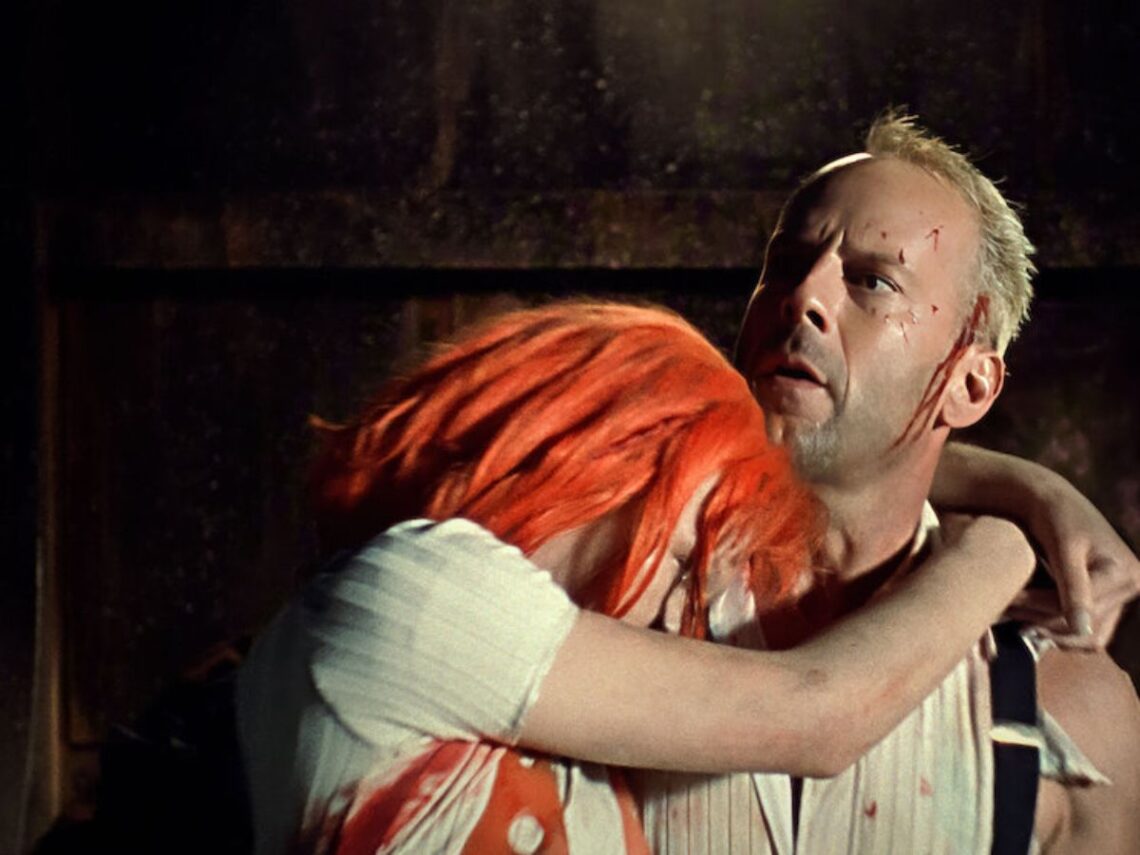
Luc Besson’s The Fifth Element came out in 1997 and, nearly thirty years later, it still stands out. Most sci-fi films from that time tried to look sleek and serious, but this film was different. The story follows Korben Dallas (Bruce Willis), a former military major who now spends his days driving people around a crowded 23rd-century city. His life changes after Leeloo suddenly lands in his cab while escaping a group trying to capture her. Soon, Korben discovers that Leeloo is connected to an ancient prophecy about a deadly force returning to Earth every 5,000 years.
The only thing capable of stopping it involves four elemental stones hidden away for protection. So now this exhausted cab driver ends up travelling across the galaxy with priests and government officers. The film really takes off once Korben and Leeloo leave Earth and head towards a luxury space resort where nearly everybody seems to be chasing the same stones for completely different reasons. The disaster that follows is what’s so amazing.
Matilda (Danny DeVito, 1996)
Anybody who grew up in the ‘90s remembers two things about Matilda: she wants her powers and fears Miss Trunchbull with their entire being. No headmistress had any business behaving that violently in a children’s film, yet here we are. The film follows Matilda Wormwood, a brilliant little girl living with parents who barely pay attention to her unless they are shouting. Her father, Harry, spends most of his time running dodgy business schemes, while her mother, Zinnia, treats parenting as a side business that’s never been paid enough attention to.
So Matilda escapes into books instead. Once she finally starts school, she meets Miss Honey, the first adult who actually notices how intelligent she is. Sadly, the school also comes with Miss Trunchbull, a former Olympic athlete who seems to believe children should live in constant fear. The best thing about Matilda is that it never talks down to kids. Danny DeVito directed it almost like a fantasy revenge story where the worst adults imaginable finally get what’s coming to them.
Casino (Martin Scorsese, 1995)
Martin Scorsese made Casino straight after Goodfellas, and instead of going a little slow afterwards, he made an even more intense film. The story is based on real events surrounding the mafia’s control over Las Vegas during the 1970s and early ‘80s, which probably explains why everything in the film feels so filthy. Robert De Niro plays Sam “Ace” Rothstein, a gambling expert sent to Las Vegas by the mob to run the Tangiers casino. On paper, Ace has the perfect setup, as he has money and endless connections.
Then comes Nicky Santoro. Joe Pesci plays him as a man completely incapable of solving problems and only making them ten times worse. At the same time, Ace falls for Ginger McKenna, played by Sharon Stone, whose relationship with him ruins him. What makes Casino so addictive to watch is how it starts with glamour, then gradually becomes uglier as greed takes over.
Fried Green Tomatoes (Jon Avnet, 1991)
Based on a book by Fannie Flagg, Fried Green Tomatoes starts inside a nursing home with Evelyn Couch meeting an elderly woman called Ninny Threadgoode, who begins telling her stories about a café in 1920s Alabama run by two women, Idgie Threadgoode and Ruth Jamison. Eventually, Evelyn becomes emotionally attached to these people whom she’s never even met.
The flashbacks make up most of the film, following Idgie and Ruth as they build a life together in the middle of a deeply conservative Southern town. Ruth arrives in Whistle Stop, trapped in an abusive marriage, while Idgie spends most of her life fighting with societal norms of how a woman should behave. Their cafe slowly becomes a gathering place for the town, but the story keeps getting messier around them. With further developments, it becomes much darker. A lot of discussion around the film still comes from the relationship between Idgie and Ruth.
Starship Troopers (Paul Verhoeven, 1997)
When Starship Troopers came out in 1997, the film got marketed as this big sci-fi action blockbuster about soldiers fighting giant alien bugs. Naturally, audiences went in expecting a straightforward war movie. Instead, director Paul Verhoeven made something far stranger. Half the film plays like military propaganda on purpose. Even the recruitment adverts inside the story feel absurd once you realise what the film’s actually mocking. Yes, mocking!
It is the story of Johnny Rico, played by Casper Van Dien, who joins the Mobile Infantry after graduating from school alongside Carmen Ibanez and Carl Jenkins. At first, most of them treat military service as a path towards careers or impressing whoever they fancy. Then humanity ends up at war with an alien species known as the Arachnids after an attack destroys Buenos Aires. And once the fighting starts, the film becomes very violent. Entire squads get wiped out in seconds. But that’s really where the film earns its cult reputation now because beneath all the explosions, Verhoeven was taking the piss out of fascism the entire time.