


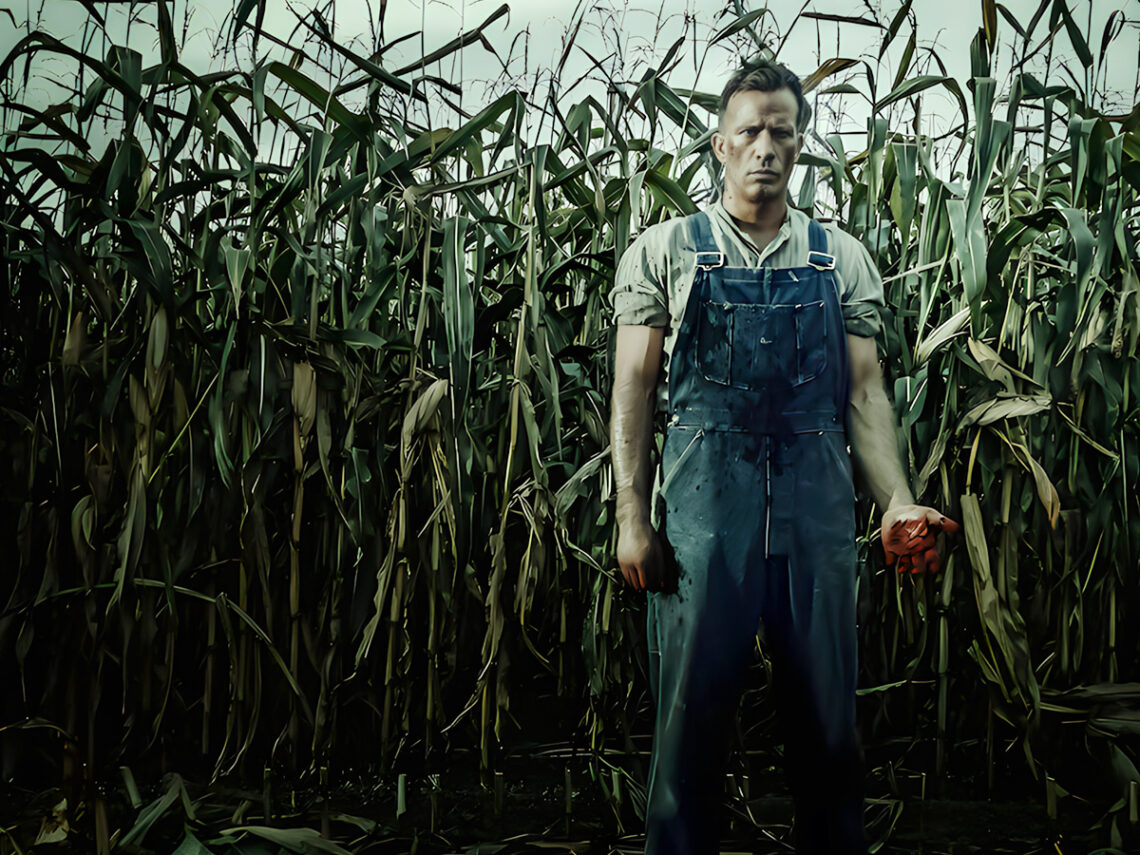
The 2017 Stephen King adaptation that plays in America’s wild west: ‘1922’
Searching for the perfect, dark post-script to America’s wild west on Netflix? Well, look no more beyond the 2017 Stephen King novella adaptation, 1922.
Adapted from Stephen King’s 2010 novella, the plot follows a Nebraska farmer who murders his wife for financial gain, convincing his son to play a role in the conspiracy while triggering a terrifying spiral of supernatural hauntings, guilt, and violent retribution.
Although 1922 is primarily a psychological horror story about a farmer who murders his wife for her land, the backdrop of the movie meticulously captures the erosion of old frontier values and the dark reality of what actually went down in the rural West. The entire narrative hinges on a collision between two worlds and their standard set of norms.
The 1922 protagonist, Wilf, is unfairly obsessed with the rugged, isolated lifestyle of the 19th-century pioneer, a core believer of the idea that a man’s pride rests with his land. So, when his wife, Arlette, dreams of selling her inherited plot of land to move into the city and start anew in the booming city of Omaha, chronicling the rise of modernisation, the “man” in Wilf sees her aspirations as a threat to his source of wealth and pride.
While the tension might come across as personal, the themes have a historical legacy because the plot captures exactly what was happening to Western farmers in 1922, when the rugged, self-sufficient individualist was feeling cornered by industrialisation and urban expansion. Therefore, to keep the ghost of his old frontier alive, Wilf doesn’t think twice before murdering Arlette.
The corrosion of a fleeting belief system and Wilf’s desperation to hold on to it also comes with evident collateral. His son, who helps his father to murder his mother, runs away later in 1922 with his pregnant girlfriend, becoming a nomadic gang of bank robbers. But since the era of the romanticised outlaw, evocative of the wild west, is dead, instead of finding themselves riding off into the sunset, they face the harsh realities of modern law enforcement.
This brings viewers to the paradox of choice. As someone belonging to the younger generation, Wilf’s son had the choice to pick between the declining and emerging belief systems and values. Whether knowingly or unknowingly, he did choose to murder his mother, inadvertently embracing what the other side represents.
While classic Western myths heavily incline towards the idea of rugged masculinity and the ability of survival through sheer willpower, 1922 takes those ideas and rots them from the inside out. The transition at the centre of this wild west era subverts the existing cliches associated with a hero to showcase how it ends up creating a monster when change is obstructed in a world that constantly evolves.