


Six bombshell revelations from ‘The Idaho Murders: College Nightmare’
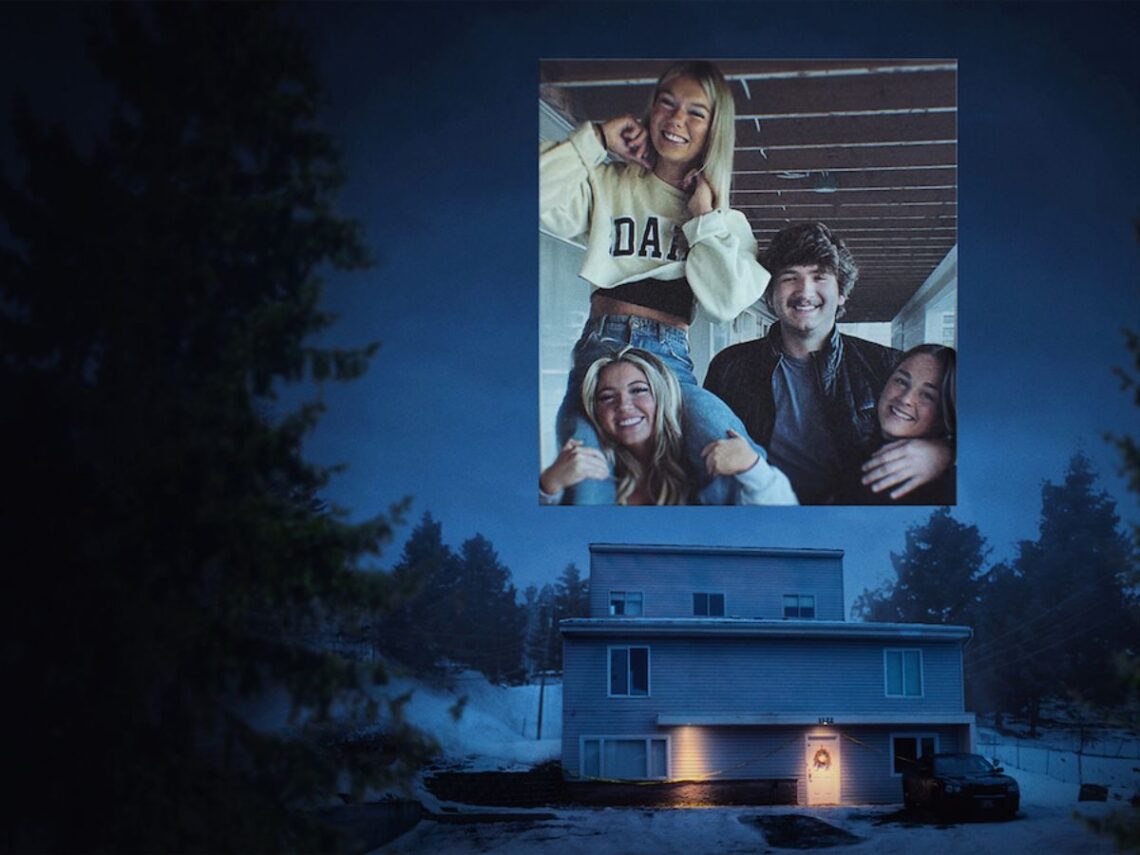
The Idaho Murders: College Nightmare on Netflix revisits the unbelievable killings of four University of Idaho students – Madison Mogen, Kaylee Goncalves, Ethan Chapin, and Xana Kernodle – who were found lifeless in an off-campus home in Moscow in 2022, leaving the entire nation in a state of panic as the killer walked free for nearly two months.
The Netflix documentary, released on July 29th, features exclusive police bodycam footage, archival elements, and firsthand accounts from the victims’ families, offering in-depth insights into the case that shook the tight-knit college town to its core.
While former Washington State University criminology student Bryan Kohberger pleaded guilty to the crime in July 2025, resulting in a sentence of four consecutive life terms in prison, he withdrew his guilty plea on July 26th, 2026, a year later, in an unexpected turn of events.
Although the latest development is not a part of the true-crime documentary, The Idaho Murders: College Nightmare is not short of chilling revelations. So, here’s a list of six such moments that took everyone aback.
Six unbelievable details from The Idaho Murders: College Nightmare
The campus-wide message alert
“Something’s happened in our house, and we don’t know what,” said surviving roommates Dylan Mortensen and Bethany Funke when they called 911 to report that their friends were “not waking up,” still unaware that they had died. The shock, panic, fear, and confusion were audible from those shaking voices.
The intensity of the situation was, however, visually brought to light through the responding officers’ bodycam footage featured in The Idaho Murders: College Nightmare, which offers an unprecedented look at the quadruple homicide.
It shows Mortensen and Funke alongside other friends on the curb outside the house as cops flooded the scene to investigate. One of them told an officer, holding back tears, “You could have told us what happened before they sent a text.” But when the cop looked clueless, another friend explained, “They sent a text [message] to the entire university before even telling us what happened.”
The Dean of Students at the University of Idaho, Blain Eckles, said in the documentary that he was “flabbergasted” when law enforcement informed him about “four dead individuals” that they thought were college students. He further explained that in such cases, it was protocol to use an internal emergency alert system.
Chief of the Moscow Police Department Anthony Dahlinger, however, revealed that they weren’t warned before sending out the alert, reasoning that law enforcement would have preferred collaboration.
The victims’ friends received unjustified hate while they were grieving
On December 30th, 2022, over a month after the murders, the police apprehended Bryan Kohberger. However, in the days leading up to his arrest, the conspiracy theories about the identity of the killer reached a peak online.
Ethan Chapin’s friend Cooper Atkinson, who appears in the true-crime documentary, recounts receiving non-stop messages on social media from people who kept pestering him. “There were accusations flying left and right. There were just no answers, so people were finding answers themselves,” he said.
Another friend of Chapin, Peter Elgorriaga, said, “I got a few of those messages – people saying that I’m the killer, I’m gonna get caught. Like, what are you saying?”
Bryan Kohberger’s questionable behaviours
Lilly Karaban, who attended classes with Bryan Kohberger at Washington State University, claimed that she allegedly sat beside him in a class called “Minds of a Serial Killer” when Kohberger studied Criminal Justice. “I remember him asking a question about every single topic in that class,” she said, noting how classmates would often “roll their eyes” because they found it too much.
According to Karaban, Kohberger reportedly “adored” that specific class, and it was as if “a switch went off” in him every time. He would allegedly sit by himself before the class, but once the class began, he was a “different person,” “actively taking notes on everything.” “I never saw him socialise, I never saw him at any party, any sporting event. He was in his own world,” she added.
Following Kohberger’s arrest, Kaylee’s sister Alivea stumbled onto a questionnaire on Reddit that was allegedly shared by him and addressed to those who had been incarcerated. “Some of the questions were, ‘why did you choose that victim or target over others?’” she said. Meanwhile, another question was, “Before making your move, how did you approach the victim or target?”
“Looking at the questions now, it almost seemed like preparation for the perfect crime,” Alivea weighed in. The documentary also reveals an alarming lack of data on Kohberger’s devices, alongside a concerning search history.
Bryan Kohberger allegedly pretended to “help” the victims
According to Dylan Mortensen, the surviving roommate who was home the night of the murders, she heard a scream and also overheard one of her deceased roommates talk about an intruder. While she confessed to locking her doors out of fear to the police, she also recalled hearing an unidentified guy’s voice saying, “You’re going to be okay. I’m gonna help.” However, she believes it was not a very helpful tone; in fact, definitely “weird.”
What would have happened if the cops were called earlier?
The Idaho Murders, the subject of Netflix’s latest true crime series, reportedly took place between 4.00 and 4.25 on November 13th, 2022. However, the surviving roommates didn’t ring the cops until it was nearly afternoon, almost eight hours later.
Kaylee’s mother, Kristi Goncalves, recalled asking the coroner if the victims had a chance of survival had the cops been called sooner. “The answer was no,” she said. Similarly, Kacy Johnston, Xana Kernodle’s friend, didn’t blame the surviving roommates either for “making the fall call late.” “I can only imagine if it were me in either one of their shoes – I would have never believed what occurred in the house that night.”
Anthony Dahlinger also explained, “People are in shock, it’s traumatic. I mean, I can’t imagine being of that age, and being able to comprehend that this horrific thing just occurred.”
The brutality pushed a few responding police officers to seek therapy
The responding police officers reportedly had a difficult time processing the brutality of the crime scene. “I know not only myself, but every officer that was involved that day, has had a hard time with that,” Anthony Dahlinger said on screen. “This was so outside anything that we had dealt with at the police department,” he noted, highlighting how the Moscow Police Department was backed up by the Idaho State Police and 22 FBI agents.
The case was so disturbing in its nature that Dahlinger admitted the impact it had left. It “caused me a lot of trauma, to the point where I ended up having to get help and talk to a professional – which, for law enforcement officers, is a very difficult thing to do.”