


Is Ron Howard’s ‘Eden’ based on a true story?
Ron Howard’s gripping survival thriller, Eden, originally released in 2024, has landed on Netflix this week.
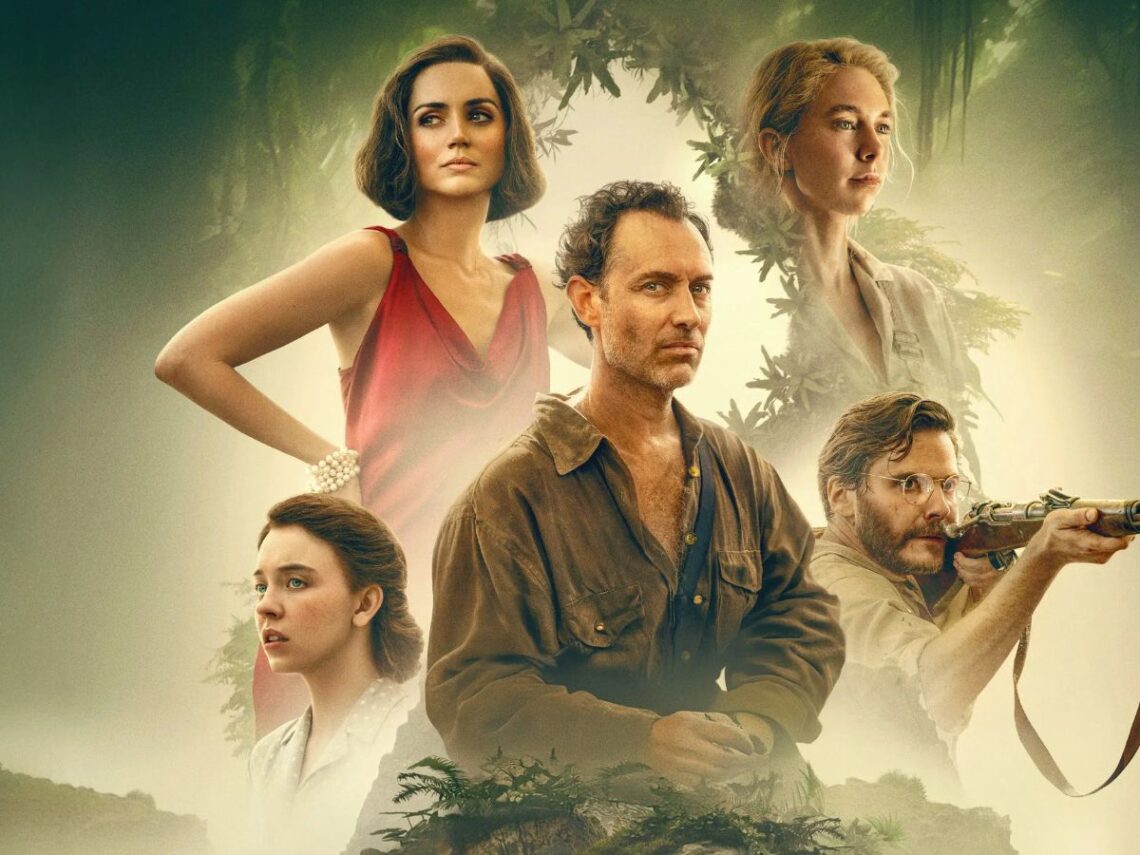
So, if you’re planning to make Eden a part of your December watchlist, it’s important to know about its origins. The historical movie, starring Jude Law, Ana de Armas, Vanessa Kirby, and Sydney Sweeney, is based on a jaw-dropping true story.
For those still uninitiated with the premise, Eden tells the story of three distinctly diverse European families who settle on a remote and vacant island in the Galápagos, with hopes and dreams of creating a utopian life in a world still reeling from the scars of an all-consuming war and the birth of fascism in the 1930s.
While the families are determined to start anew, little do they know that the real threat to their survival isn’t the island, but actually themselves.
The thriller doesn’t have a single literary origin. If anything, it’s inspired by numerous books written about the incident, including the memoirs, Satan Came to Eden: A Survivor’s Account of the “Galápagos Affair” published in 1936 and Floreana: A Woman’s Pilgrimage to the Galápagos, published in 1989 in the US.
The film is also heavily influenced by Abbott Kahler’s nonfiction book Eden Undone and the 2013 documentary, The Galápagos Affair: Satan Came to Eden.
Eden chronicles the shocking true story of these three groups of Europeans who distanced themselves from the rise of fascism in Europe for island life, “in an attempt to forge their versions of a tranquil society.” Dr Friedrich Ritter and his partner, Dore Strauch, arrived in 1929, and were followed by the Wittmer family in 1932. The latter chose the island life after reading about Ritter and Strauch’s experiment in the media.
That same year, Baroness Eloise Wehrborn de Wagner-Bosquet and her lovers, Rudolf Lorenz and Robert Philippson, also arrived in the previously uninhabited island, albeit later on. But with their arrival, chaos was not far behind.
With each group set on their own idea of utopia, they went head-to-head against each other, resulting in disastrous and mysterious consequences. In a conversation with TIME, Howard said, “This romantic idea that you could be your best self if you could just get away from modern society is something that we share to this day. Yet the problem is we drag society with us because we are society.”