


Four dark thrillers on Netflix that will mess with your head
There comes a point in every thriller that gives you the illusion that you have cracked it. You have the suspect and the motive, and you believe you are two steps ahead of everyone on screen and feeling very pleased with yourself, and just then the film drops the twist bomb. Yeah, forget your usual spoon-feeding thrillers; these are some high-stakes chopsticks.
Gone Girl is a prime example of it, because the second you thought you understood Nick and Amy, everything flipped, while Memento basically asked whether your own memory deserved to be trusted in the first place.
That is the good stuff, though, isn’t it? Not just the twist itself, but that horrible little moment when you realise the clues were sitting there the whole time and you still didn’t catch them.
Netflix has a few films that love playing that game, so maybe do not get too attached to your first theory because these four are waiting to make a fool of you.
Four dark thrillers on Netflix that will mess with your head
Shutter Island (Martin Scorsese, 2010)
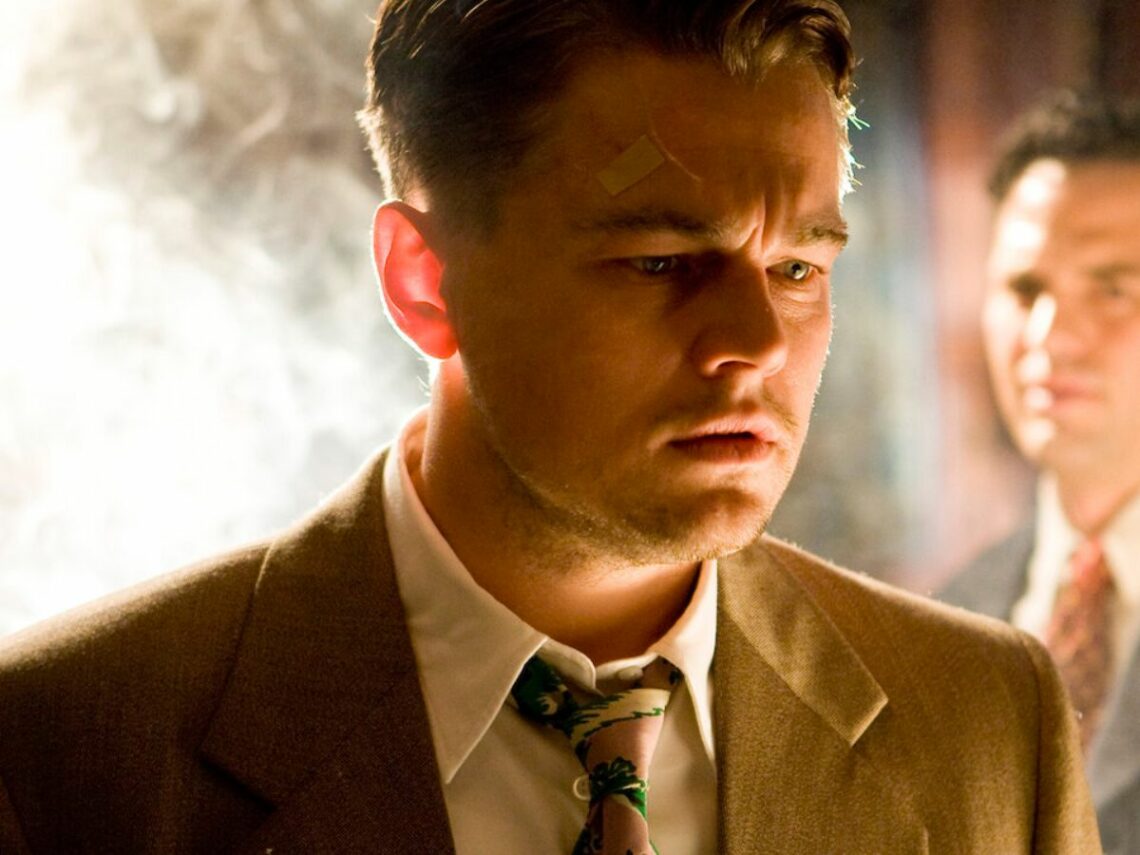
Shutter Island was always going to be up here… It was kind of the obvious choice. That is because very few thrillers have been quite so good at letting you feel clever about your theory before pulling the rug out from under it. It starts with Teddy Daniels arriving at Ashecliffe Hospital with his new partner, Chuck Aule, after patient Rachel Solando disappears from a locked ward on a remote island, and straight away the place feels wrong.
Nobody says much, and Teddy trusts even less. All that, to be interrupted by a storm rolling in, cutting them off from the mainland. Exactly what any investigation needs, ugh!
The snag here is that Teddy has more riding on the case than he first admits. Martin Scorsese adapted Dennis Lehane’s novel for his fourth film with Leonardo DiCaprio and spends the whole runtime feeding you clues that look useful right up until they don’t. Go ahead, by all means, pick a theory. Just a little piece of advice: don’t get attached.
Fractured (Brad Anderson, 2019)
Look, hospitals are stressful enough, but Ray Monroe in Fractured loses his wife and daughter halfway through the visit. Suddenly that dental appointment of yours looks rather pleasant, doesn’t it? Peri goes off for tests with Joanne, Ray waits around and then… poof. Both gone. Even worse, the hospital claims there is no record of them.
And this is where Fractured has you by the throat, because one minute Ray’s conspiracy makes perfect sense and the next something does not add up. Now what? Trust Ray, trust the hospital, or admit you haven’t got a clue? Sam Worthington keeps that panic bubbling while The Machinist director Brad Anderson keeps moving the goalposts. Every single time you think you’ve got it, the film betrays you, but isn’t that what you asked for?
The Call (Lee Chung-hyun, 2020)
How about we mess with time a little bit, eh? The Call starts with Seo-yeon heading back to her childhood home, where she finds an old cordless phone and then, ring-ring, gets a call from Young-sook, who is in the exact same house… Just twenty years earlier. Once the pair realises what is happening, their calls start linking 1999 with the present, and before long Seo-yeon is watching her own life change because of things said down that phone.
Lee Chung-hyun’s feature debut reworks the 2011 film The Caller, but this version takes the idea and gives it a much nastier twist. Changing the past sounds brilliant on paper until somebody realises they can use it against you. Before you know it, every ring becomes a warning that something may have shifted again, and bloody hell, how are you meant to trust your own memories after that? You see, Korean thrillers are known to be twisty, and this is a great pick.
Mirage (Oriol Paulo, 2018)
Now that we have already made phones dangerous, might as well ruin old televisions too. In this Spanish thriller Mirage, Vera discovers during an electrical storm that she can speak through a TV to Nico, a boy living in the same house 25 years earlier, and manages to stop him from dying. Result! Or… not quite. She wakes up to find the present has been rewritten, and her daughter no longer exists in her life. Huh, a hefty price to pay for a good deed, that one!
Now Vera has to work out what on earth she changed and get her old life back before the window closes. Oriol Paulo, the director behind The Invisible Guest, clearly enjoys watching viewers tie themselves in knots, because every time the timeline starts making sense, he throws another curveball at you. Clever little film, really.