


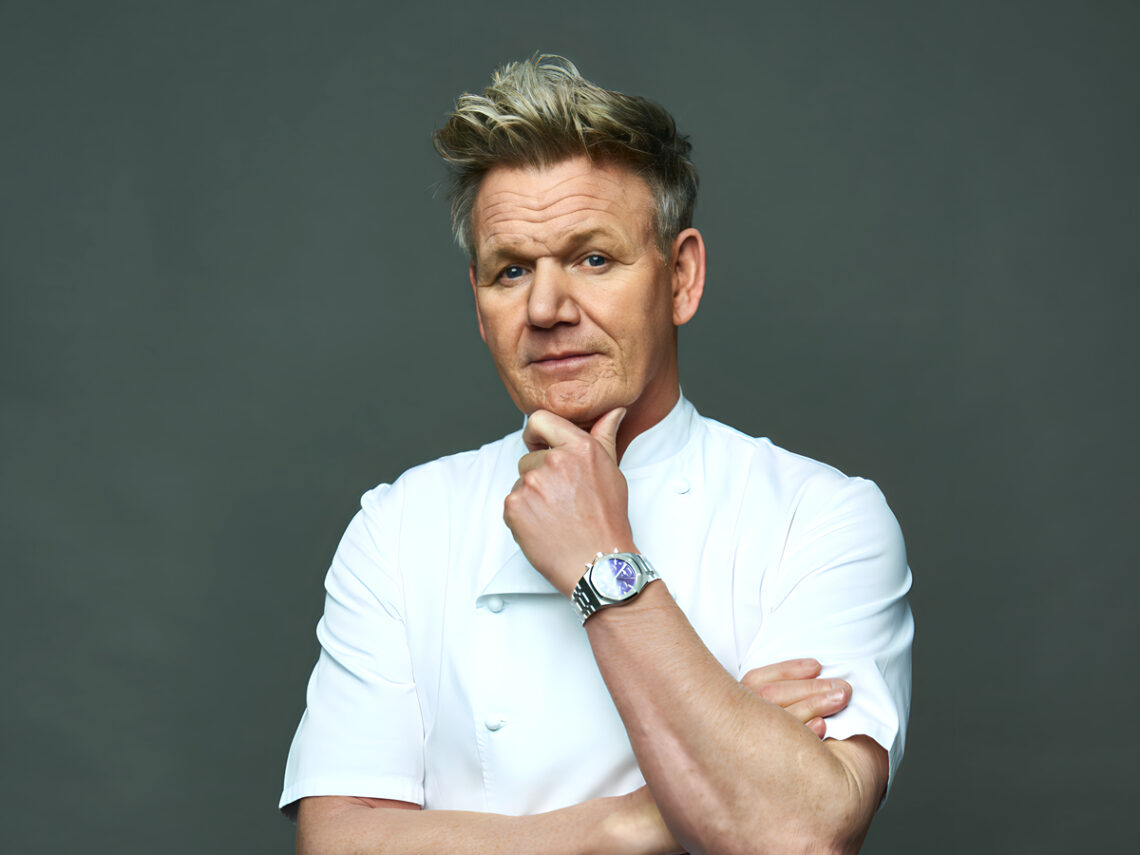
Five surprising revelations from the new Gordon Ramsay Netflix documentary
Why did nobody warn us that Being Gordon Ramsay was going to be a visual memoir and not some behind-the-scenes kitchen drama or some chef empire recap? Those who have watched this series can tell where all that intensity actually came from.
Like, yes, we all know him as the man who can destroy a risotto with one sentence, but the documentary kind of peels that layer back and helps you realise that all that yelling was never just about the food. What if it started way before the Michelin stars and the TV deals? And once that idea sits well, you start watching the whole thing differently.
It does not open with some highlight reel. It takes you into his childhood, and before you know it, you are not looking at a celebrity chef anymore. You are looking at a kid who grew up in a house where belief in him was not exactly overflowing. And when he talks about that, he is not dramatic about it, which almost makes it worse, because the story from his mouth makes you realise how long he has been carrying it.
And then everything clicks. Where did that drive, that competitiveness, come from? The refusal to ever look unprepared. It gets very personal and very intentional, very quickly. With that, here are five major revelations from Being Gordon Ramsay that will shock you.
Five surprising revelations from Being Gordon Ramsay
Growing up with a dad who didn’t believe in him
One of the most uncomfortable parts of Being Gordon Ramsay is hearing Gordon Ramsay talk about his father without the TV bravado. The documentary has not even remotely attempted to sugarcoat it. Ramsay describes growing up with a dad who dismissed his ambitions and made it clear he did not see potential in him. And no, it wasn’t “tough love” or any kind of motivational pressure. Just doubt.
And the documentary shows us that this affected him so much that he made that rejection his obsession with proving himself. You start connecting dots between the intensity everyone sees on Hell’s Kitchen and the kid who was constantly told he would not amount to much. The film frames his drive less as ego and more as survival. It is not about shouting at chefs. It is about outrunning a voice that once told him he was nothing. And suddenly the volume makes sense.
The guilt he still carries about his brother
The documentary gets real when Ramsay talks about his brother Ronnie, who struggled with addiction. And by the way, this is not framed as a side note. He says plainly that while he was opening restaurants and building what would become a global brand, his brother was dealing with something much darker. Unfortunately, their timelines overlapped, and that overlap clearly still sits with him.
One very admirable thing about Gordon is that he does not try to rewrite history to make himself look heroic. He admits he was busy and was focused on work. And even though addiction is complicated and not something you can solve by showing up, he still questions whether he could have done more. For someone known for control and precision, this is the one part of his life where there were no fixes, and that lack of control still lingers.
He almost didn’t survive his first days
One detail that will most certainly catch you off guard is that Ramsay nearly died as a newborn. Being Gordon Ramsay mentions complications during his birth that left doctors unsure whether he would make it through those first days. Again, a reminder that this is not shown in a very dramatic way but rather kept more natural, which shocks you even more.
When you place that fact next to the way he lives now, constantly moving and pushing forward, it helps you understand the intensity. Yes, we get it, Gordon. Life gave you a second chance, and you made the most of it. He talks about life as something that can flip quickly, and that perspective does not come from nowhere. Before there were Michelin stars and television contracts, there was a very real chance none of this would have happened at all.
Trying to be a global star and a present dad
Coming on to the role of Gordon as a father, he makes it very clear in the documentary that it is not easy to balance fame and family. Ramsay runs restaurants across multiple countries, films television shows year-round, and still insists that being present for his kids matters more than any expansion plan. He openly says he did not want to repeat the emotional distance he experienced growing up.
You see footage of him at home that feels completely different from the kitchen persona. He jokes, he listens, and he shows up. And of course, we’ve seen a glimpse of his kids here and there, but here it feels different. He also admits there were years when work dominated everything. The difference now is intention. He talks about blocking time for family the same way he schedules a major launch.
He trusts influencers more than traditional critics now
Yes, you read that right. It feels almost ironic, right? You see, Ramsay built part of his early reputation battling traditional restaurant critics. Now he says he pays closer attention to digital creators and social media voices. His reasoning is simple: influencers represent how real diners respond in the moment, not weeks later in a formal review. Basically, more organic.
He explains that online feedback forces chefs to stay adaptable. If something misses, the reaction is instant; on the other hand, if something lands well, it goes viral the next second. He believes it is more about understanding how people actually experience the food. Hearing that from someone who came up in the fine-dining establishment shows how much the industry has shifted.