


Five perfect book adaptations to binge on Netflix
Book adaptations are nothing but an open invitation for readers to start nitpicking and nobody’s complaining because when you start reading, there is a certain way that your imagination takes shape, and when those expectations aren’t met, oops, there comes back the old friend: disappointment. Which makes Netflix all the braver to launch them back-to-back at us.
Just take a look at some important adaptations Netflix brought out way. Zoe Kazan’s East of Eden is reworked from John Steinbeck’s sprawling family story around Florence Pugh’s Cathy Ames, while Dolly Alderton’s six-part Pride and Prejudice is bringing Emma Corrin and Jack Lowden to Longbourn.
Then you have Emily Henry’s Funny Story and Happy Place heading for the screen too, so, yeah, the adaptation conveyor belt is not slowing down any time soon.
And maybe that is the whole point. A good adaptation does not have to elbow the book out of the way but just has to make you feel like choosing the screen version was not the lazy option. And that’s why people love East of Eden because even though the narrative was changed, the soul was kept intact. So if you consider yourself a nitpicker or not, here are five book adaptations on Netflix you must watch.
Five perfect book adaptations to binge on Netflix
The Notebook (Nick Cassavetes, 2004)
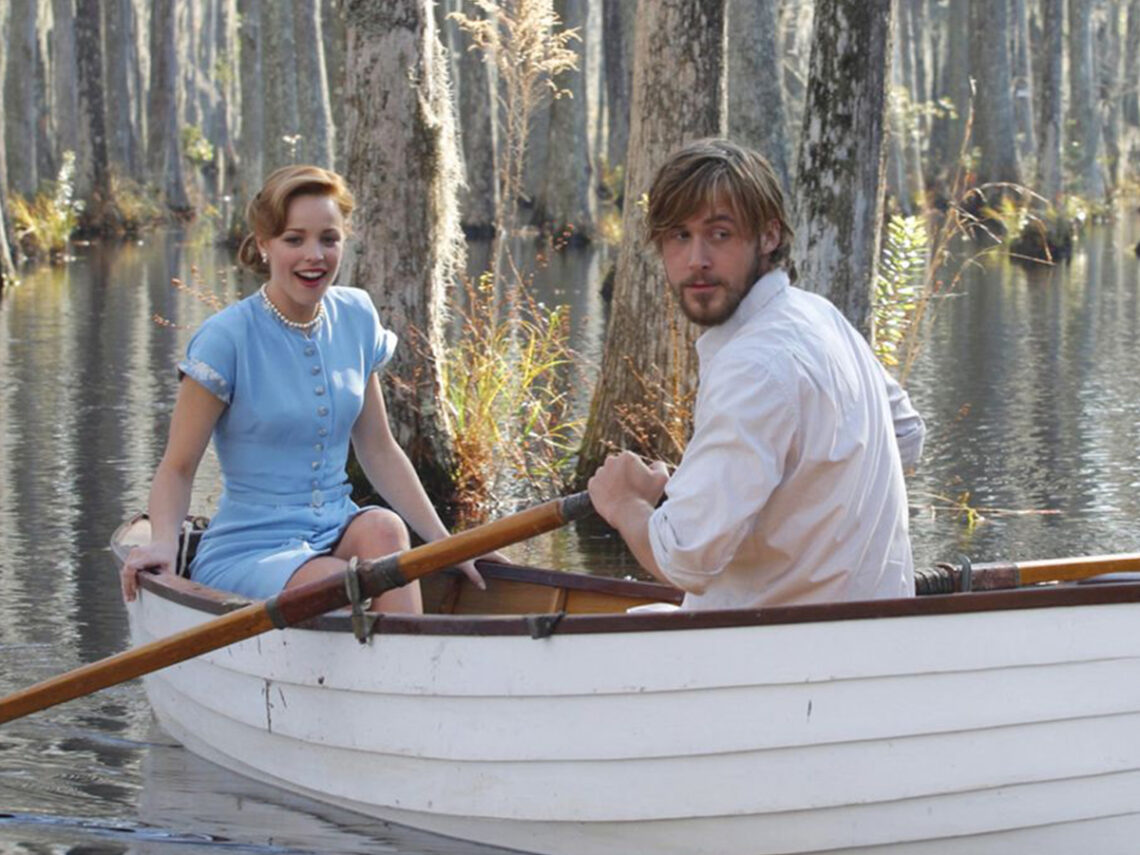
Come on, do we even need to sell this one? But there is a problem with The Notebook, and that’s that it set the bar absurdly high for big, sweeping romance, and frankly, it’s a bit unfair to the others. Nick Cassavetes takes Nicholas Sparks’ 1996 novel and gives Noah and Allie the full treatment: Ryan Gosling is the mill worker, Rachel McAdams is the rich girl with a future already decided for her, and between class, family pressure and a seven-year gap, their relationship gets put through just about everything before that rain-soaked reunion finally blows everything to pieces.
And then the film does something cleverer than just giving you two beautiful people in love. James Garner is reading their story from a notebook to Gena Rowlands as her memory starts slipping away, so all that youthful passion has so much more meaning. Sparks drew the novel from his then-wife’s grandparents, who had been married for more than 60 years, and isn’t it fascinating! Tissues are probably sensible.
The White Tiger (Ramin Bahrani, 2021)
The White Tiger won the 2008 Man Booker Prize, which sounds respectable until you actually meet Balram Halwai and realise the whole thing is being narrated by a man who is charming and ambitious but also a little effed up. Ramin Bahrani’s adaptation follows Balram from village life into a job driving Ashok and Pinky, whose liberal values look admirable enough right up until their own comfort is threatened.
After Pinky kills a child in a hit-and-run, Balram’s employers prepare to make him take the blame, and you can probably see why something in him snaps after that. He realises loyalty is getting him nowhere… So he murders Ashok, steals his money and uses it to start a business in Bangalore. What were you expecting: a standard rags-to-riches tale?
The Good House (Maya Forbes and Wallace Wolodarsky, 2021)
It starts with Hildy Good, a lady with a drinking problem. Ask her, though, and she will tell you everyone is making a fuss over nothing, which is your first clue that The Good House is going to be a crazy ride. Sigourney Weaver plays the New England estate agent from Ann Leary’s 2013 novel, and Hildy is sharp enough to spot everybody else’s weaknesses while doing an excellent job of dodging her own.
Then Frank Getchell wanders back into her life, and, of course, that stirs up far more than old feelings. Hildy starts getting pulled towards the family history and addiction she has spent years brushing aside.
What makes it fun is that Hildy talks straight to us, so you start off feeling like her confidant. Then the penny drops: maybe she is not letting you in at all. Maybe she is just very good at selling her own version of events, as we said before.
Lady Chatterley’s Lover (Laure de Clermont-Tonnerre, 2022)
Oh, this one has a massive piece of history attached to it that you could almost forget there is an actual story behind all the scandal. D.H. Lawrence’s 1928 novel spent years being treated like contraband before Penguin’s 1960 edition ended up at the centre of that famous obscenity trial, so Netflix had quite a reputation to contend with before it made a film.
Emma Corrin plays Connie Chatterley, whose marriage to Clifford changes after he returns from the First World War paralysed, and the distance between them starts to become impossible to ignore. Then Jack O’Connell’s Oliver Mellors enters, and, well, that complicates matters.
It starts as an affair and turns into something much bigger because Connie is not just choosing between two men… she is starting to question the life that has been chosen for her and the class divide matters just as much as the romance.
The Children’s Train (Cristina Comencini, 2024)
The Children’s Train starts with a choice no seven-year-old should have to make sense of: Amerigo’s mother sends him away because keeping him with her might mean giving him less of a future. That is love, apparently, and try explaining that to a child. Cristina Comencini adapts Viola Ardone’s novel about Amerigo, a boy from Naples who travels north on one of the Happiness Trains, part of a postwar programme that placed children from the struggling south with families elsewhere in Italy.
Amerigo ends up with Derna, who never planned on becoming anyone’s mother, and then he finds warmth and opportunity with her, but he still has a strong connection with his homeland.
It’s even more fascinating because the programme was real, with around 70,000 children relocated between 1945 and 1952, but the film keeps that history at Amerigo’s eye level.