


Five brilliant book adaptations to stream on Netflix this weekend
Books have a funny old journey to the screen, with a studio snapping one up one day, and everyone gets excited, and then… nothing. Years can pass while scripts change hands. Hell, we have seen directors come and go, because book adaptations are not as easy as it seems.
It takes some makers years to figure out how to bring a book to the screen while maintaining its essence. Bloody hell, in that process some books have practically had a second life before the cameras even start rolling.
And once filming does begin, well, that is another can of worms, because what reads like a dream on the page can land with a thud on screen. Cinema plays by different rules, so scenes get chopped and characters get merged.
The films below all took a few detours getting there, and those bumps in the road make their stories worth digging into.
Five brilliant book adaptations to stream on Netflix this weekend
The Time Traveler’s Wife (Robert Schwentke, 2009)
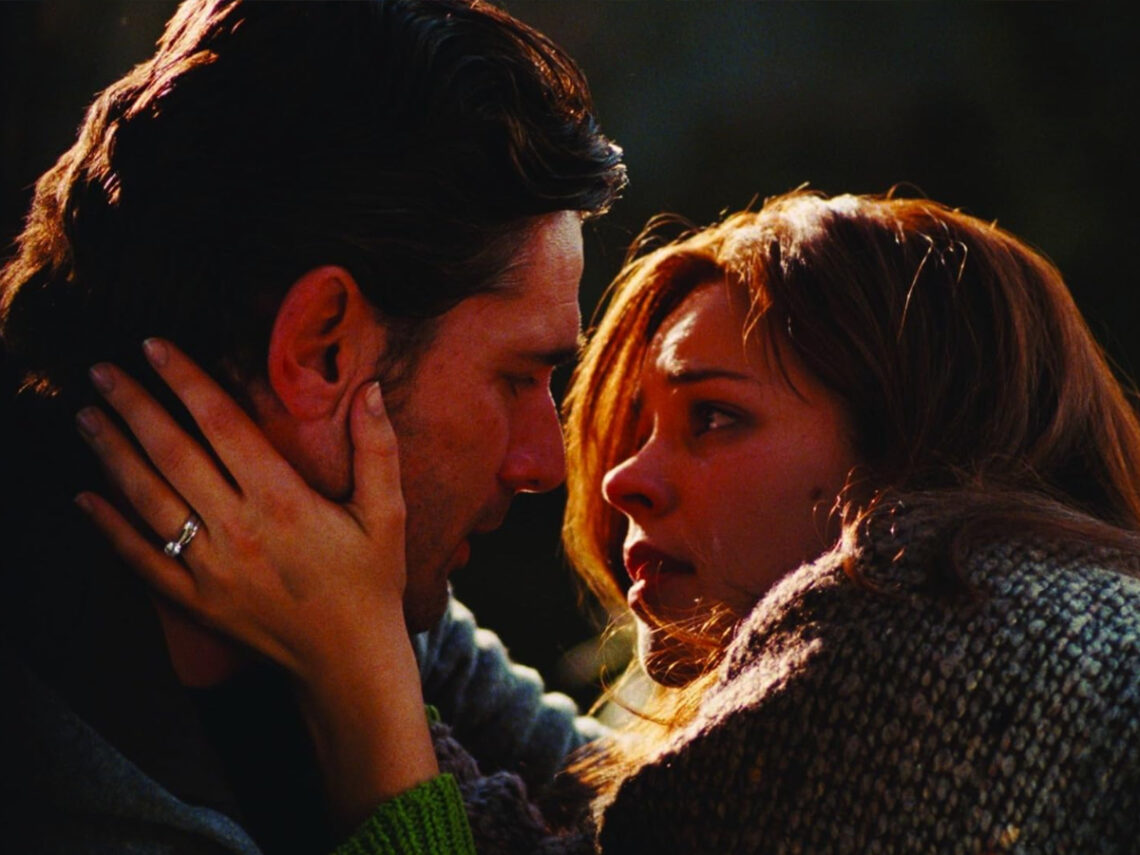
Did you know Brad Pitt and Jennifer Aniston bought the rights to Audrey Niffenegger’s The Time Traveler’s Wife before the book was even published? Yep, Hollywood saw this one coming from a mile away. And honestly, is that even surprising? Eric Bana plays Henry, a librarian who gets thrown through time without warning, while Rachel McAdams plays Clare, the woman who has known different versions of him for most of her life. Sounds romantic enough, right? Well, hang on.
Because here is where your head starts doing somersaults: Clare has known Henry since she was a child, but when she meets the adult Henry in his own timeline, he has absolutely no idea who she is. Ouch! Try explaining that on a first date. The film trims a fair bit of Niffenegger’s nonlinear storytelling, probably wise unless everyone fancied bringing a flowchart, but it keeps the part that stings: how do you build a life with someone who could vanish halfway through it?
The Invisible Man (Leigh Whannell, 2020)
From a bloke who disappears through time to one who makes himself disappear on purpose: you guessed it right, we are taking a darker turn on the book adaptations road now. H.G. Wells’s illustrious 1897 novel follows Griffin, a scientist whose invisibility gives him enormous power, but Leigh Whannell’s 2020 film flips the whole thing and puts Cecilia, an abuse survivor, at the centre instead. She escapes her controlling partner, and as she hears that he is dead and takes a sigh of relief that it’s over, she is proven horribly wrong.
That’s because the things start moving when nobody is there: stuff like doors opening, rooms feeling wrong, and Cecilia becoming convinced he is still controlling her somehow. Creepy enough for you? Whannell keeps Wells’s idea of invisibility as power but turns it into a story about abuse and coercive control, so suddenly an empty room is not empty at all. Fascinating! Wells asks what an invisible man can do… Whannell asks what it feels like when nobody believes he is there.
Wicked (Jon M. Chu, 2024)
Remember how we spoke about some adaptations taking a long route before they come to the screen? Wicked is a perfect example for that. Gregory Maguire’s ‘Wicked’ came out in 1995, the Broadway musical arrived in 2003, and then, two decades later, Jon M. Chu finally brought that version to the big screen. By then, this story had done the rounds. Cynthia Erivo’s Elphaba goes to Shiz University and gets paired with Ariana Grande’s Glinda. Before long, the Wizard starts making Oz look a lot less magical than advertised.
The interesting part is that the film is really adapting the musical, not Maguire’s novel line by line, so the heart of it stays with Elphaba and Glinda’s friendship. Chu also split the stage show into two films rather than cramming the lot into one, which means the first half gets room to stretch its legs. After thirty years of rewrite, Wicked finally arrives on screens, and well, it did pretty well for itself.
Babe (Chris Noonan, 1995)
Right, from witches to a pig who wants a sheepdog’s job, tell you what, adaptations really do go everywhere. Babe comes from Dick King-Smith’s 1983 children’s novel The Sheep-Pig, where a piglet learns to herd sheep by being polite instead of bossy, and Chris Noonan’s 1995 film keeps that lovely little idea intact. Farmer Hoggett wins Babe at a fair and brings him home. But then he starts realising the tiny bloke may actually be better at the job than half the animals around him. Not bad for a pig, eh?
The behind-the-scenes story is even madder: 47 piglets played Babe because pigs grow too fast for one animal to keep looking the same on camera. Live animals were mixed with animatronics and digital effects, and somehow, it all worked. The film won the Oscar for Visual Effects, but it was also nominated for Best Picture, with its screenplay landing an adapted screenplay nod too.
The Spiderwick Chronicles (Mark Waters, 2008)
And in the end comes The Spiderwick Chronicles, which had one pretty ridiculous job on its hands: take five books and squeeze the lot into 96 minutes without making the whole thing feel like somebody hit fast-forward. Yeah, no biggie, just five books crammed into one film! Holly Black and Tony DiTerlizzi’s series follows the Grace siblings after they move into the Spiderwick Estate, stumble across Arthur Spiderwick’s field guide and, whoops, discover a magical world that was probably better left alone. Trouble is, an ogre called Mulgarath wants that book too, so there goes the cosy family move.
Mark Waters’s 2008 film turns the five-book story into one big chase, with Freddie Highmore playing both Jared and Simon while Sarah Bolger takes on Mallory. Loads had to go, so no shock there, but Black and DiTerlizzi were keen for the characters to still feel like themselves.